
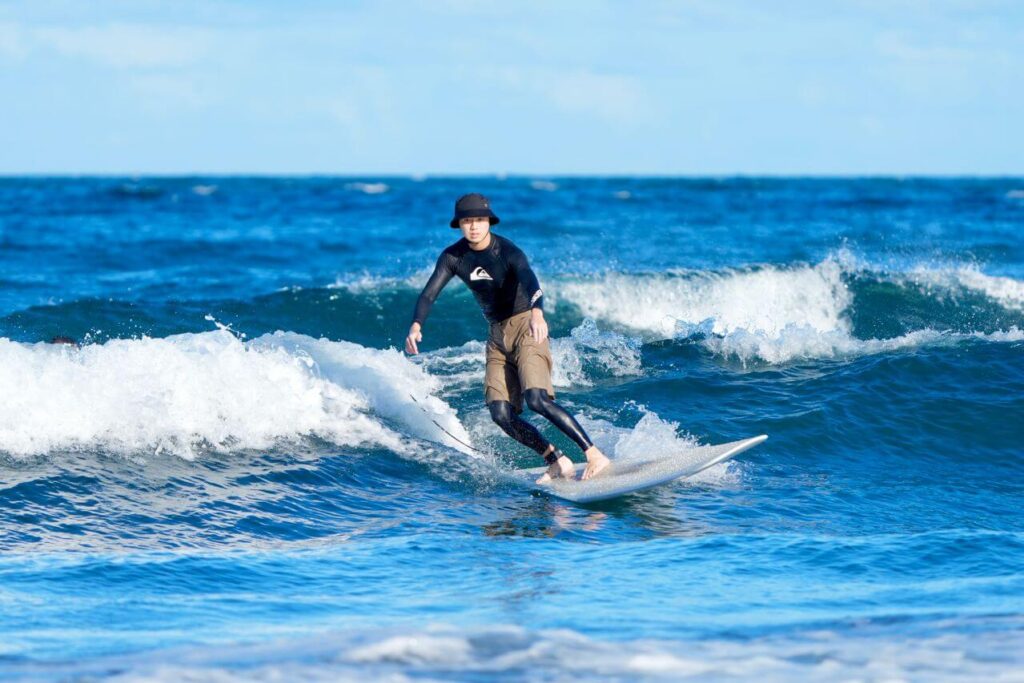
If you surf Pacific Beach regularly and your back has been nagging you, the problem is almost never the ocean. It is almost always what you do before and after you get in the water. As a back pain chiropractor near Pacific Beach, I see this pattern constantly in my practice: active, healthy people sidelined by pain that started with small daily habits, not a single dramatic injury.
Chronic back pain rarely shows up all at once. It builds slowly, one skipped stretch or poor sleep position at a time, until the day your back locks up paddling out near Crystal Pier.
The American Chiropractic Association estimates that 31 million Americans experience low back pain at any given time. For surfers and active people in PB, repetitive strain is a leading cause. The good news? Most of these habits are fixable once you know what to look for.
Here are the seven habits most likely behind your back pain, and exactly what you can do to fix each one.
1. Skipping the Warm-Up Before Paddling Out
Paddling into cold water without warming up first puts enormous strain on a spine that has not been prepared to move. Most surfers in Pacific Beach wake up, grab their board, and walk straight from Lamont Street down to the sand. At that point, your lumbar muscles are tight, your hip flexors are shortened from sleep, and your thoracic spine has almost no rotation.
In my practice, tight hips and a stiff mid-back are among the first things I check in surfers because they keep reloading the lower back, no matter how much you stretch it directly.
- The Impact: The lower back compensates for tightness in the joints above and below it. When the hips and the thoracic spine are stiff, the lumbar vertebrae absorb shock that they aren’t ready to handle.
- The Fix: Spend just five minutes doing hip circles, cat-cow stretches, and trunk rotations on the beach to protect your spine.
2. Sitting Too Long After a Session
Going straight from a two-hour surf session to sitting in a car or at a desk is one of the most common triggers of back pain I see among active Pacific Beach locals. After surfing, your spinal muscles are fatigued and slightly inflamed.
- The Impact: Sitting, especially slouched over a wheel or a laptop, loads the lumbar discs heavily, and staying seated right after exertion keeps that pressure constant while the tissue is trying to recover.
- The Fix: If you work remotely or commute across town after a morning session at Law Street, build a ten-minute walk into your transition. It keeps circulation moving through the spinal tissues and reduces the stiffness that tends to solidify into chronic pain over weeks and months.
3. Sleeping on an Old or Unsupportive Mattress
Your spine does most of its recovery while you sleep, and a mattress that no longer supports you quietly undoes whatever good your sessions and stretching accomplish. Overnight, while you are lying down, your discs reabsorb the fluid they lose under load during the day, recovering their height.
Many PB renters inherited a mattress with the lease, and those beds are often years past their useful life. In fact, an old mattress is one of the first things I ask about when a patient’s pain is at its worst first thing in the morning.
- The Impact: A sagging mattress forces your lumbar spine into flexion for six to eight hours a night. Over time, this stretches the posterior ligaments and increases pressure on the discs.
- The Fix: If you wake up stiff and loosen up as the morning goes on, your mattress is worth examining before anything else. Consider replacing it or adding a firm, supportive topper.
4. Neglecting Core Strength Between Sessions
Surfing uses your core, but it does not build it in a balanced way. The paddling motion overdevelops certain muscles in the posterior chain while leaving the deep stabilizers, particularly the transverse abdominis and multifidus, relatively weak. Many of my patients who add targeted core work notice a real reduction in recurring back pain within a few weeks, even without changing anything else about their routine.
- The Impact: The multifidus, in particular, fine-tunes how load is shared across each segment of the lumbar spine. When it is undertrained, the lower back absorbs forces it was never designed to manage alone.
- The Fix: Adding two or three short sessions of targeted core work each week, like dead bugs, bird dogs, and Pallof presses, builds the internal stability that surfing alone does not provide.
5. Poor Carrying Habits With Boards and Bags
Carrying a longboard under one arm from your garage to the beach and back is an asymmetrical load that strains the lower back every time you do it. Add a heavy wax bag, wetsuit, and water bottle slung over the same shoulder, and you are walking half a mile each way in a laterally flexed posture.
When a surfer comes in with tightness on only one side, a carrying habit is often the first thing I look at. The trouble is that most people do not notice the loading until it shifts from tightness to pain.
- The Impact: Surfers who park a few blocks up on Cass Street and make that walk daily are effectively giving their lumbar spine a slow, repetitive injury with every trip.
- The Fix: Switch sides when carrying your board, use a two-strap backpack instead of a single-shoulder bag, and consider a board bag with a padded strap to distribute weight more evenly.
6. Ignoring Tightness Until It Becomes Pain
Most surfers in Pacific Beach treat tightness as a normal background condition and only seek help once it crosses into real pain. By the time pain appears, the underlying dysfunction has usually been building for weeks or months. As a back pain chiropractor near Pacific Beach, I can identify the specific joints and soft tissue structures driving your tightness before it becomes a problem that takes you out of the water. Early care also tends to be shorter and less involved than waiting.
A study in the journal Spine tracked patients after a new episode of low back pain and found that those who began treatment early had lower downstream healthcare use and costs than those whose care was delayed.
- The Impact: Tightness in the hip flexors, piriformis, or thoracic extensors rarely resolves on its own without some form of targeted treatment and leads to compensatory injuries.
- The Fix: Get a chiropractic assessment to address the problem early for a faster, simpler recovery.
7. Inconsistent Hydration and Its Effect on Spinal Discs
The gel-like core of each spinal disc is up to 80 percent water, and it depends on consistent hydration to keep its height and shock-absorbing capacity.
- The Impact: Surfers who spend hours in the sun at PB or Tourmaline, then follow a session with coffee instead of water, are pulling fluid from the very structures that cushion their vertebrae. Chronic low-level dehydration works against the disc’s ability to stay tall and absorb load.
- The Fix: Drinking water steadily through the day, not just during your session, is one of the simplest ways to support long-term spinal health.
The table below summarizes each habit and its primary spinal impact:
| Habit | Primary Spinal Impact | Easy Fix |
| Skipping warm-up | Lumbar shock absorption failure | 5-minute pre-surf mobility routine |
| Sitting after sessions | Increased lumbar disc compression | 10-minute post-session walk |
| Old mattress | Overnight lumbar flexion stress | Replace or add firm mattress topper |
| Weak deep core | Excess load on lumbar vertebrae | 2-3x/week stabilization exercises |
| Asymmetrical carrying | Repetitive lateral lumbar strain | Switch sides, use two-strap bag |
| Ignoring tightness | Delayed treatment, worse outcomes | Early chiropractic assessment |
| Poor hydration | Accelerated disc dehydration | Consistent water intake daily |
Each habit listed above contributes to back pain independently, but they tend to compound each other when several are present at the same time.
What to Do If Your Back Is Already Hurting
If you are already dealing with persistent back pain, the first step is getting a clear picture of what is going on in your spine. Self-treating based on a guess can make some conditions worse. In a full assessment, I determine whether your pain comes from a joint restriction, a disc problem, a muscle imbalance, or some combination, and then build a treatment plan specific to your body and activity level.
Getting Back in the Water Without the Pain
I built my practice around helping active San Diego locals stay active. That means working with your surfing schedule, not around it, and giving you the tools to keep the same problem from coming back. If you also deal with neck stiffness from paddling or shoulder pain from pop-ups, those often connect to the same spinal patterns driving your back pain, and addressing them together tends to produce faster results.
Schedule an Assessment
If your back pain has been lingering or getting in the way of your sessions at Tourmaline or the PB break, I can help. You get one appointment with me at a time, not a rotating set of rooms, and same-day or next-day visits are often available.
A new patient exam includes a 45-minute evaluation plus a written treatment plan. Call my office, Taylor Duncan Chiropractic, at (619) 733-9737 or book online, and we will put together a clear plan to get you back to the activities you care about.
Frequently Asked Questions
What causes back pain in surfers who are otherwise healthy and active?
Back pain in surfers who are otherwise healthy usually comes from repetitive strain rather than a single injury. Surfing loads the lumbar spine asymmetrically through paddling, pop-ups, and sustained prone positioning. When that combines with daily habits like poor posture, tight hip flexors, or skipped warm-ups, the cumulative stress builds into chronic pain even in people who are fit. As a back pain chiropractor near Pacific Beach, I can assess which specific patterns are driving your symptoms.
How do I know if my back pain needs a chiropractor or just rest?
The difference between back pain that needs a chiropractor and pain that just needs rest comes down to how long it lasts and how it behaves. Rest helps acute muscle soreness, but it does not resolve joint restrictions, disc problems, or muscle imbalances. If your pain has lasted more than a week, recurs after activity, or is accompanied by morning stiffness, it is worth getting a professional assessment here in Pacific Beach. Waiting typically prolongs recovery time and allows the underlying issue to become more entrenched.
Can a chiropractor in Pacific Beach help me stay in the water while treating my back pain?
Yes, a chiropractor in Pacific Beach can often help you keep surfing while treating your back pain. I design my treatment around active patients, so the goal is to reduce pain and address the underlying issue while keeping you moving. Most patients do not need to stop surfing entirely during care, and I structure treatment around your surf schedule and current pain levels.
How many chiropractic visits does it take to fix back pain from surfing?
The number of visits depends on how long the problem has been building and how much tissue is involved. Most San Diego surfers I see with early-stage back pain notice a clear improvement within four to six visits. Chronic or more complex cases can take a longer plan. After your first assessment, I will give you a clear outline of the recommended treatment timeline.
Is back pain from surfing different from regular back pain?
Back pain from surfing shares some features with general back pain but tends to involve patterns specific to the sport. Repeated lumbar hyperextension from pop-ups, shoulder and thoracic restriction from paddling, and hip tightness from the surf stance all create loading patterns not seen in non-surfers. A chiropractor who regularly treats active Pacific Beach locals will recognize these patterns and treat them more effectively than a generalized approach.
What is the best way to prevent back pain from surfing in Pacific Beach?
Preventing back pain from surfing in Pacific Beach starts with consistent warm-ups before entering the water, building deep core strength between sessions, staying hydrated, and addressing tightness early, before it becomes pain. Periodic check-ins with a back pain chiropractor, even when you are not in pain, help catch and correct small imbalances before they compound into a real problem.
Does Taylor Duncan Chiropractic treat other surf-related injuries besides back pain?
Yes. Beyond back pain, I treat a range of conditions common in active San Diego locals, including neck stiffness, shoulder problems, hip tightness, and knee pain. These often show up alongside back pain in surfers because they stem from the same movement patterns: paddling, pop-ups, and the surf stance. Treating them together usually leads to a faster, more complete recovery, which is why I assess the whole chain rather than just the spot that hurts.