
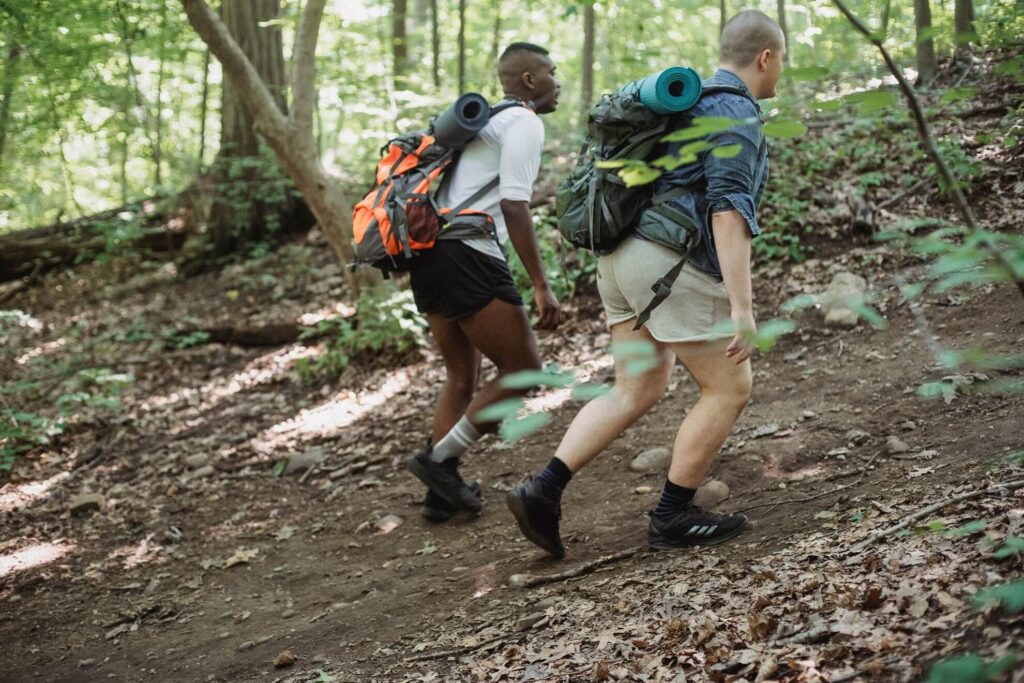
If you hike Tecolote Canyon regularly, you already know your lower back pays for it. The trails inside Tecolote Canyon Natural Park are beautiful, but they combine steep descents, uneven roots, and off-camber terrain that puts real stress on your lumbar spine. The good news is that I can help you recover faster and keep hiking longer.
Low back pain rarely starts with one dramatic moment. It usually builds up over several hikes until one morning you can barely get out of bed. Low back pain is already the single leading cause of disability worldwide, affecting an estimated 619 million people, according to the World Health Organization. If you’re parking near Clairemont Square and heading into the canyon a few times a week, your back is taking more of a beating than you think.
Below, I’ll walk through the five trail sections that cause the most trouble, why each one is hard on your spine, and how back pain treatment can help you keep hiking.
Why Canyon Hiking Is Harder on Your Back Than You Think
Hiking on canyon terrain compresses and rotates your spine in ways that flat walking never does. When you step downhill on a loose trail or twist to avoid a root, your lumbar vertebrae and the discs between them absorb the shock. Do that for two miles, and the muscles around your lower back start to fatigue, which means the joints and discs have to work even harder.
The Tecolote Canyon trail system runs roughly from Balboa Avenue in the north down through the canyon floor toward Friars Road. That elevation drop feels manageable on the way in, but it creates consistent eccentric loading on your hamstrings and hip flexors, both of which pull directly on your lumbar spine. A 2026 study in Clinical Biomechanics found a measurable relationship between hip flexor tightness and low back pain in active adults, and canyon hiking tightens those muscles with every downhill step. The tighter they get, the harder your lower back has to work to compensate.
Here’s where that shows up most on the trail.
The 5 Trail Sections Most Likely to Cause Lower Back Pain
Not every part of the canyon is equally demanding on your back. These five sections are the ones I hear about most from hikers who come into my office after a weekend on the trails.
1. The north entry descent from Bannister Street
This drop into the canyon is steep and often sandy, which means your foot slides slightly with each step and your core fires hard to compensate. Over a mile or two, that constant stabilization fatigues the paraspinal muscles along either side of your lumbar spine. If you already have a disc issue, this is often the section where you’ll notice it first.
2. The creek crossing near the canyon floor
Stepping across wet rocks forces quick lateral shifts in your weight, which load one side of your sacroiliac joint at a time. The SI joint sits right at the junction of your pelvis and spine, and one awkward step is enough to set off pain that radiates into the glute and down the leg. Many people mistake this for sciatica when it is actually a joint alignment issue.
3. The root section along the eastern ridge
The eastern ridge trail has exposed roots that require constant micro-adjustments in your stride. Each adjustment is small, but the cumulative rotational stress on the lumbar vertebrae adds up quickly. This is the section where people often feel fine during the hike and then notice stiffness the next morning.
4. The long, flat stretch near the canyon center
Flat trails feel easy, but this section has soft, uncompacted soil that causes your foot to pronate inward with each step. Overpronation like this tilts your pelvis and shifts the load unevenly across your lumbar spine. It’s one of the patterns I check for first when a hiker comes in with lower back pain, since it’s easy to miss. Hikers who do long distances on this section often develop one-sided lower back tightness that gets worse after sitting in the car on the way home.
5. The final climb back out toward Tecolote Road
Climbing is generally easier on your discs than descending, but this exit requires extended hip flexion at a steep angle. If your hip flexors are already tight from the descent, this climb pulls your lumbar spine into an exaggerated arch. That position compresses the facet joints in your lower back and can cause a sharp, localized pain that lingers for days.
What These Trail Problems Do to Your Spine Over Time
A single hike rarely causes serious damage. The problem is repetition. Hikers who hit Tecolote Canyon two or three times a week without addressing muscle tightness and spinal alignment tend to develop a predictable pattern of symptoms, one I see often in my practice.
The table below shows the most common trail stressors, what they affect, and what they typically feel like.
| Trail Stressor | Structure Affected | Common Symptom |
| Steep descent | Lumbar discs and paraspinals | Deep ache in the lower back after activity |
| Lateral weight shifts | Sacroiliac joint | Glute pain or one-sided hip soreness |
| Root stepping | Lumbar vertebral joints | Morning stiffness after hikes |
| Soft soil pronation | Pelvis and lumbar alignment | One-sided tightness that worsens with sitting |
| Steep climb with tight hip flexors | Lumbar facet joints | Sharp pain with backward bending |
This table reflects the patterns I see most often in hikers who come into my office. Individual experiences will vary based on fitness level, hiking history, and any existing spinal conditions.
What Back Pain Treatment Looks Like for Hikers
Back pain treatment for hikers focuses on restoring movement, not just reducing pain. My approach starts with identifying where your spine has lost normal motion and which muscles are pulling it out of alignment. For hikers, that usually means the lumbar spine, the SI joint, and the hip flexors all need attention at the same time.
Here is what a typical care plan looks like for a Tecolote Canyon hiker dealing with lower back pain:
- Spinal adjustment: Gentle, targeted adjustments restore normal movement to your lumbar vertebrae and sacroiliac joint, reducing the joint irritation that builds up over repeated hikes.
- Soft tissue work: I address tight hip flexors and paraspinal muscles directly to relieve pressure on the joints they pull on.
- Gait and movement assessment: How you walk and plant your feet on uneven terrain significantly affects your spine, so improving your movement patterns reduces the risk of re-injury on your next hike.
- At-home exercises: I assign specific stretches and strengthening movements to keep your progress going between visits and build resilience for the canyon terrain.
Most hikers start feeling a meaningful difference within three to six visits. My goal is always to get you back on the trail, not keep you off it.
When to Stop Pushing Through It
There is a difference between normal post-hike soreness and a symptom that needs attention. Soreness that fades within 24 to 48 hours is typical. Pain that gets worse the day after a hike, pain that radiates down your leg, numbness or tingling in your foot, or sharp pain when bending are all signs that something in your spine needs evaluation. Waiting tends to make these things harder to treat, so the earlier, the better.
In my experience, sciatica-type symptoms that go untreated for several weeks become measurably harder to resolve. If you’re hiking the canyon and noticing leg symptoms afterward, that’s worth addressing right away.
Tecolote Canyon Is Worth Protecting Your Back For
Tecolote Canyon is one of the best trail systems in San Diego, and it’s worth protecting your ability to keep hiking it. The five sections covered here, from the Bannister descent to the final climb, load your spine in different ways, but the underlying fix is usually the same: restoring normal movement in your lumbar spine, SI joint, and hip flexors before small strain turns into something that sidelines you. Hip alignment plays a bigger role in hiking-related back pain than most people realize, and understanding what a first visit involves can make it easier to take that first step toward getting checked out.
Schedule Your Evaluation at Taylor Duncan Chiropractic
If your lower back has been talking to you after recent hikes, I’d like to help. My office, Taylor Duncan Chiropractic, is close to Bay Park, Linda Vista, and the neighborhoods near Clairemont Square, so getting checked out after a hike doesn’t mean driving across town. I run a one-on-one practice, meaning you see me directly at every visit, not a rotating cast of providers. Same-day and next-day appointments are often available, and a new-patient exam includes a comprehensive evaluation and a written treatment plan.
Call (619) 733-9737 or schedule your visit online to get a clear picture of what’s going on and what it takes to fix it.
Frequently Asked Questions
Can hiking Tecolote Canyon cause lower back pain?
Yes, hiking Tecolote Canyon can cause lower back pain. The trail combines steep descents, uneven surfaces, and soft soil that place repetitive stress on your lumbar spine, sacroiliac joint, and hip flexors. Over multiple hikes, this adds up and can lead to disc irritation, joint inflammation, or muscle strain.
Is a chiropractor in Clairemont able to treat hiking-related back pain?
A chiropractor in Clairemont can treat hiking-related back pain effectively. I work with active people who develop lower back and hip pain from trail hiking, addressing spinal alignment, joint mobility, and the muscle tightness that builds up from canyon terrain.
How long does back pain treatment take after a hiking injury?
Back pain treatment duration after a hiking injury depends on how long the issue has been building and how severe the joint or disc involvement is. I typically see significant improvement within three to six visits, though I’ll determine your full plan after an initial evaluation.
What is the difference between muscle soreness and a spinal injury from hiking?
The difference between normal soreness and a spinal injury from hiking comes down to how the pain behaves. Soreness fades within 48 hours and does not radiate. Pain that worsens the day after a hike, shoots down your leg, or comes with numbness or tingling is a sign that a spinal structure, like a disc or joint, may be involved and needs to be evaluated.
Should I stop hiking if my lower back hurts?
You don’t necessarily need to stop hiking if your lower back hurts, but you should get it evaluated before continuing at the same intensity. Pushing through pain without knowing the cause can turn a minor issue into a longer recovery. I can assess what’s happening and tell you what level of activity is safe while you heal.
Why does my lower back hurt after hiking downhill more than uphill?
Lower back pain after downhill hiking is more common than after uphill hiking because descending places eccentric load on your lumbar muscles and increases compressive force on your discs and facet joints. Uphill sections do strain your hip flexors, but gravity works against your spine much harder on the way down.
Where is Taylor Duncan Chiropractic located relative to Tecolote Canyon?
My office is located in Clairemont, one of the closest neighborhoods to Tecolote Canyon Natural Park. If you’re coming from Clairemont Square, Clairemont Mesa Boulevard, Bay Park, or Linda Vista, you can reach me quickly after a hike on the canyon trails.