An active release technique chiropractor treats the soft tissue and nerve restrictions that a spinal adjustment alone can’t resolve, which is why pain often returns within days of a chiropractic visit elsewhere. I use ART daily in my San Diego practice because it reaches problems in muscle and nerve tissue that adjustment alone doesn’t touch.
Pain that returns within days of a chiropractic visit is one of the most frustrating cycles a patient can experience. Many people assume that means chiropractic care isn’t working for them, when in reality it often means the treatment addressed joint mechanics while leaving tight, scarred soft tissue untouched. Research comparing spinal manipulation combined with myofascial release against manipulation alone found the combination produced significantly better outcomes for people with chronic low back pain, which is the same principle behind combining ART with adjustment.
Below, I walk through what Active Release Technique is, why the “crack and go” model falls short for many patients, and how I approach care here in San Diego.
Key Takeaways
- Targeted relief: ART releases the scar tissue and adhesions in muscles, tendons, and nerves that a spinal adjustment cannot reach, allowing relief to hold instead of fading within days.
- Root cause resolution: A joint that keeps slipping out of alignment is often being pulled there by tight, scarred tissue, not a structural problem with the joint itself.
- Versatile treatment: I use ART daily in my San Diego practice for conditions like carpal tunnel syndrome, plantar fasciitis, IT band syndrome, rotator cuff pain, sciatica, and tension headaches.
- Personalized care: Every visit starts with a movement assessment and hands-on palpation, ensuring treatment is built around your movement patterns, not just your pain points.
- Efficient outcomes: Most patients notice real improvement within three to six visits, with the ultimate goal of resolving the problem rather than relying on repeat visits indefinitely.
What Is Active Release Technique and Why Does It Matter?
Active Release Technique (ART) is a patented soft tissue method that breaks down adhesions and scar tissue inside muscles, tendons, and nerves. It matters because that scar tissue is often the culprit keeping your pain coming back.
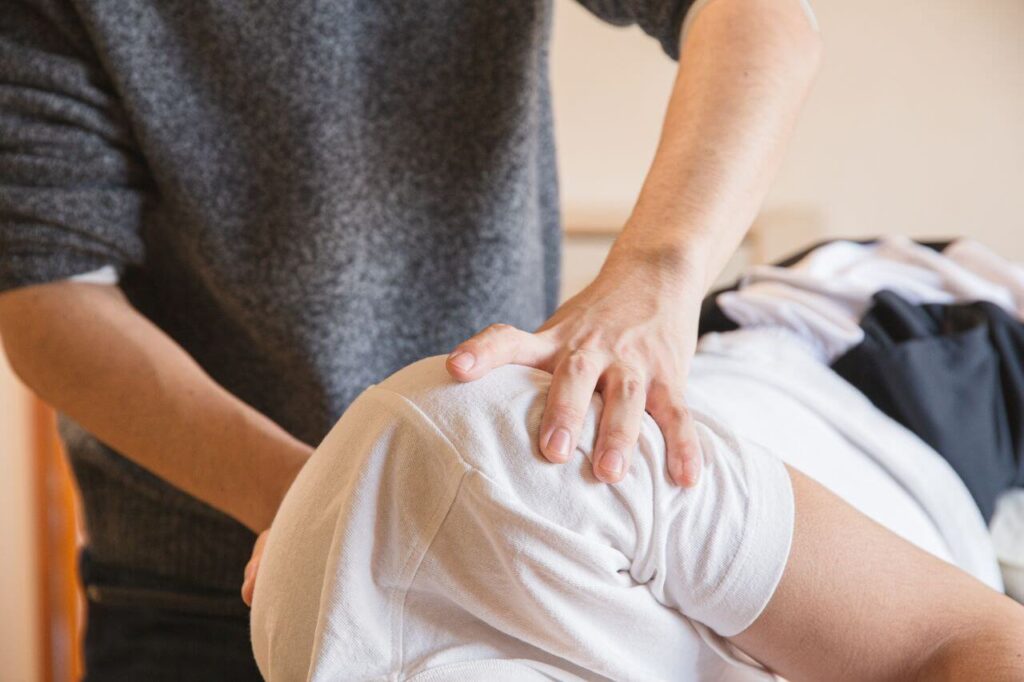
I use ART by placing precise tension on the affected tissue while guiding the patient through a specific active movement. That combination of tension and motion breaks up adhesions in a way that passive massage or stretching simply cannot replicate. Each protocol is mapped to the exact structure involved, whether that is your rotator cuff, your IT band, your piriformis, or the median nerve running through your wrist. There are over 500 specific ART protocols, and each one targets a defined structure with defined movements.
For patients in North Park who sit at a desk all day, the muscles most affected by scar tissue buildup are often the hip flexors, the upper trapezius, and the suboccipital muscles at the base of the skull. Those restrictions do not go away with a spinal adjustment alone, which is exactly why combining the two methods produces results that last.
The Problem With the Quick Adjustment Model
A fast spinal adjustment restores motion to a restricted joint, but it does not change the soft tissue environment surrounding that joint. This matters deeply because if the muscles and fascia pulling on a vertebra are loaded with scar tissue, that vertebra will simply return to its restricted position within hours or days.
The joint is rarely the problem in isolation. The soft tissue controlling the joint is the true driver of dysfunction.
I see this pattern often with runners and cyclists training around Mission Bay. They come in with recurring knee or hip pain after getting quick adjustments elsewhere. Their joints are mobile, but their soft tissue has not been addressed. Once I identify the specific muscle adhesions contributing to their movement problem and use ART to release them, the adjustment holds, their mechanics improve, and the pain stops recycling.
This is not a criticism of chiropractic adjustment. I perform adjustments in my office every single day, and they are a core part of what I do. The point is that the two methods serve different functions. Knowing when to use each one, and when to use both together, separates a provider who gets lasting results from one who keeps you coming back every two weeks without real progress.
How I Use ART in My San Diego Practice
Every patient who comes into my office starts with a full assessment before any hands-on treatment begins. I want to understand not just where the pain is, but what your body is doing when it moves. Pain is almost always a symptom of a movement or load problem happening somewhere else in the kinetic chain.
Here is what a typical ART-focused visit looks like at my office:
- Movement screen: I watch how you walk, squat, or raise your arm to identify where your body is compensating for restricted tissue.
- Tissue palpation: I manually locate the adhesions and scar tissue by feel, which tells me which ART protocols apply to your specific presentation.
- Active release treatment: I apply precise contact tension to the target tissue while you move through a specific motion, usually from a shortened to a lengthened position. This is where the adhesion breaks down.
- Chiropractic adjustment: Once the soft tissue environment is addressed, I adjust any restricted joints so the nervous system can communicate clearly with the muscles we just released.
- Movement homework: I give you specific exercises or movement patterns to reinforce the changes we made in the office so your results carry over into your daily life.
The goal of this process is not to keep you dependent on visits. It is to resolve the actual problem, so you leave with a body that functions better on its own.
ART vs. Traditional Chiropractic: A Side-by-Side Look
Patients often ask me how ART compares to what they have experienced at other offices. The table below gives a clear comparison of the two approaches so you can understand what each one addresses.
| Factor | Traditional Adjustment Only | ART + Chiropractic Adjustment |
| Primary target | Spinal joints and vertebral alignment | Soft tissue adhesions and joint mechanics together |
| Soft tissue treatment | Not directly addressed | Muscles, tendons, fascia, and nerves treated specifically |
| Duration of relief | Variable, often short-term without tissue work | Longer-lasting as root cause tissue restrictions are cleared |
| Visit frequency | Often requires frequent repeat visits | Fewer visits needed as underlying cause is addressed |
| Best for | Acute joint restrictions with minimal soft tissue involvement | Chronic pain, repetitive strain, sports injuries, nerve entrapments |
This comparison is not meant to suggest one method is superior in every case. The right approach depends on what your body needs, which is why a thorough assessment matters more than any single technique.
Who Benefits Most From ART Care in San Diego?
ART works best for people whose pain is driven by repetitive stress, overuse, or unresolved soft tissue injuries. San Diego’s active lifestyle means many patients come in with exactly these kinds of problems.
The conditions I treat most often with ART include:
- Carpal tunnel syndrome: Adhesions along the median nerve from the forearm through the wrist cause tingling and weakness. ART releases the nerve at each entrapment site rather than treating only the wrist.
- Plantar fasciitis: Chronic heel pain often involves restricted tissue in the calf and intrinsic foot muscles. ART breaks down those adhesions at the source.
- IT band syndrome: Common in runners and cyclists, this involves scar tissue buildup in the lateral hip and thigh that pulls on the knee. Rolling it out on a foam roller rarely resolves it fully.
- Rotator cuff pain: Adhesions in the shoulder girdle muscles limit overhead mobility and cause impingement. ART restores normal glide to each involved structure.
- Sciatica and piriformis syndrome: Nerve pain down the leg is often driven by scar tissue entrapping the sciatic nerve in the hip. ART releases those entrapments directly.
- Headaches from cervical tension: Tight, scarred suboccipital and upper trapezius muscles refer pain into the head. Releasing them reduces headache frequency without medication.
If you have been managing any of these conditions with stretching, rest, or repeat adjustments that keep wearing off, there is a good chance soft tissue adhesions are the piece that has not been addressed.
Ready to Get Lasting Relief From an Active Release Technique Chiropractor in San Diego?
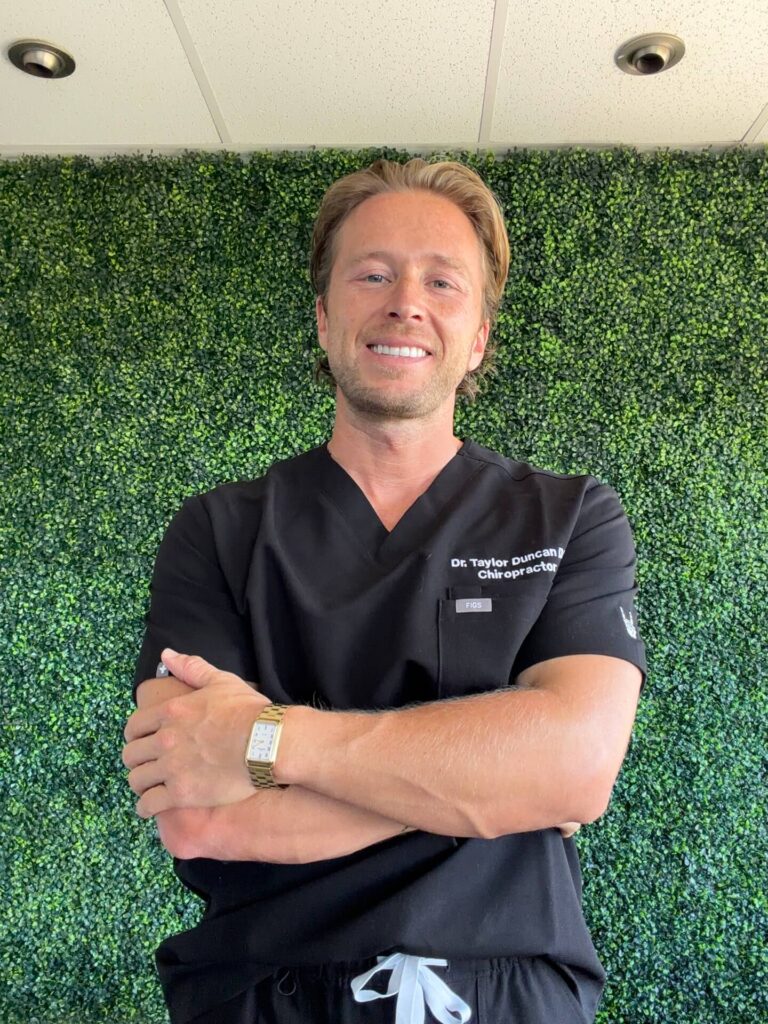
If pain keeps coming back no matter how many adjustments you’ve had, ART is likely the piece that’s been missing. I run a one-on-one practice at Taylor Duncan Chiropractic in Bay Park, so you get a full appointment to yourself, plus a first visit that includes a complete 45-minute exam and a written treatment plan. Same-day and next-day appointments are often available.
Book your first visit online, or call my office at (619) 733-9737, and we’ll build a plan around what your body needs.
Frequently Asked Questions
What is an active release technique chiropractor and how is that different from a regular chiropractor?
An active release technique chiropractor is a provider who has completed advanced certification in ART in addition to their chiropractic training. While all chiropractors are trained to adjust joints, ART certification means the provider is trained to treat muscles, tendons, fascia, and nerves using specific manual protocols. At my office in San Diego, I combine both methods because joint work and soft tissue work together produce better outcomes than either one alone.
Does active release technique hurt?
Active release technique can produce a sensation of pressure or mild discomfort during treatment, especially in areas with significant adhesion buildup. Most of my San Diego patients describe it as a productive discomfort, meaning they can feel something releasing rather than just pain for its own sake. The intensity varies depending on how chronic the tissue restriction is and how sensitized the area is. That said, I always work within a range that feels manageable for each patient.
How many ART sessions will I need to see results?
The number of sessions needed depends on how long the problem has been present and how much scar tissue has accumulated. Many patients notice meaningful improvement within three to six visits. Acute injuries with minimal soft tissue involvement may resolve faster, while chronic conditions that have been building for months or years may require more treatment. At your first visit at my San Diego office, I give you a realistic timeline based on your specific findings.
Can active release technique help with nerve pain like sciatica?
Active release technique is one of the most effective methods available for nerve entrapment conditions like sciatica and piriformis syndrome. These conditions often involve scar tissue that wraps around or compresses the nerve at one or more points along its path. ART is specifically designed to release those entrapments by applying tension to the surrounding tissue while the nerve is moved through its range. Many patients in San Diego who have struggled with sciatic pain for years have seen significant relief through this approach.
Is ART covered by insurance?
Coverage for active release technique varies by insurance plan. Some plans cover it when billed under soft tissue therapy or manual therapy codes, while others do not recognize it as a separate service.
At my office in San Diego, I do not bill private insurance directly, so patients pay for visits out of pocket. If your case involves an auto accident, I do accept medical liens and coordinate directly with your attorney so you can start care without any upfront cost. My team can help answer billing questions when you call the office.
Can ART help with wrist pain and carpal tunnel symptoms in San Diego?
Carpal tunnel syndrome and wrist pain from repetitive strain are two of the most common conditions I treat with ART in San Diego. The median nerve runs from the neck through the shoulder, forearm, and into the wrist, and adhesions can develop at any point along that path. ART allows me to release each entrapment site specifically rather than focusing only on the wrist, which is why it tends to produce better results than wrist bracing or local treatment alone. Many of my patients who work in tech or spend long hours at a keyboard have responded well to this approach.
What should I expect at my first visit with an active release technique chiropractor?
At your first visit at my San Diego office, you should expect a thorough movement assessment and health history review before any treatment begins. I want to understand the full picture of what is driving your pain before I touch anything. From there, I will identify the specific tissues involved, explain what I am finding, and walk you through the treatment plan I recommend. Most first appointments include some hands-on treatment so you leave with an understanding of what the work feels like and what we are working toward.